Sump Pump Emergency: Why Pumps Fail When You Need Them
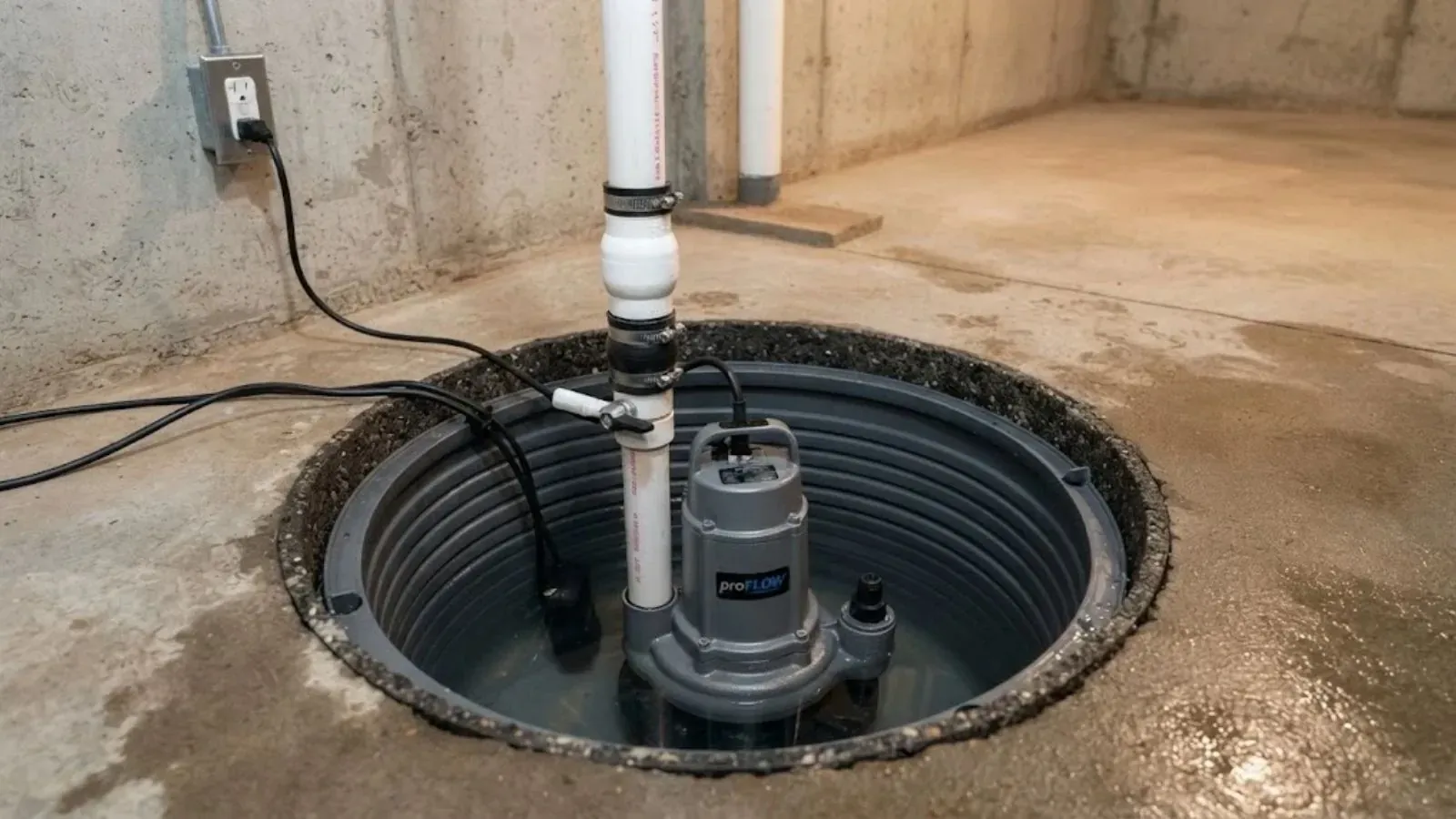
A sump pump sits in a pit in the lowest part of the basement and moves groundwater out before it reaches the floor. It sits idle for months, then has to work hard during the wettest days. Switches stick, impellers clog with silt and motors wear out from short-cycling.
Power loss is the other common cause. The same storm that raises the water table often takes out the electricity. A pump with no backup stops exactly when it is needed.
Warning signs of a failing pump
- The pump runs constantly or cycles on and off every few seconds
- It hums but does not move water
- The float rides against the pit wall or sticks above the water
- Rust, grinding noise or a burning smell from the motor
- Water in the pit does not drop after the pump starts
Pump Types And Backup Options
| Type | Best for | Note |
|---|---|---|
| Submersible pump | Most homes, quiet, sits in the pit | Handles debris better, costs more than a pedestal |
| Pedestal pump | Shallow pits, easy access | Motor sits above the pit and is louder |
| Battery backup | Power outages and storms | Needs a charged battery and regular testing |
| Water-powered backup | Homes on a municipal supply with adequate pressure | Uses water to pump water and depends on supply pressure |
A battery backup is the most common upgrade. It runs a second pump during an outage. Test it a few times a year and replace the battery on the maker's schedule.
What Happens During A Sump Pump Visit
Make the space safe
We confirm power to the pit is off before touching anything in standing water.
Diagnose
The plumber checks the float, the check valve, the discharge line and the motor.
Repair or replace
You hear the cost of repair and of a new pump, with a battery backup option.
Test under load
We fill the pit, watch the cycle and verify the water leaves the house.
Erie Soil And Water Notes
Erie averages about 16 inches of precipitation a year based on NOAA's 1991 to 2020 climate normals, but the water table rises with spring snowmelt and heavy storms. The Coal Creek dike was built after the 1972 flood, a reminder that the creek corridor has seen high water.
The Colorado Geological Survey also warns about swelling soils, which hold water and move foundations. Its swelling soils guide recommends keeping water away from foundations. Downspouts that discharge at the wall load the pump unnecessarily.
According to the Colorado Geological Survey, swelling soils are common across the Front Range, and keeping water away from a foundation is a main defense. A sump discharge that spills beside the wall works against that goal, so the plumber checks where the water goes. Plumbing codes such as the International Plumbing Code (IPC) also restrict sending storm water into the sanitary sewer.
What drives the price
Sump pump pricing depends on the pump, the pit and the discharge. You hear the number before anything is installed.
If the water problem is larger than the pump, the plumber explains options such as drainage work before continuing.
Want your real number? Call (303) 552-3896 and describe the job.
Water Coming In Right Now?
Call the Erie emergency line. We will tell you what to shut off and line up a plumber.
Keeping A Pump Ready
Pour a bucket of water into the pit each season to confirm the float rises and the pump starts. Clean the intake screen, check that the discharge pipe is clear and watch for ice at the outlet in winter. These two minutes catch most problems.
If water keeps returning, see basement waterproofing for drainage solutions. A burst supply line looks like a flood too, and burst pipe repair covers that. We serve Lafayette as well. See the Lafayette page.
Sump pump calls cover ZIP 80516 and the surrounding ZIPs 80026, 80027, 80530 and 80514. Homes near the Coal Creek corridor and its dike, built after the 1972 flood, should treat spring thaw and heavy storms as the time to test a pump and a battery backup.
Questions About This Service
Yes. The emergency line is open 24/7, including storm nights and weekends. If your pump fails or the pit is overflowing, unplug it, stay out of the water and call. Arrival depends on the hour and call volume.
Most last roughly seven to ten years, depending on how often they run. A pump that runs every few minutes wears out sooner.
If you have ever had water in the basement, or the pump handles heavy flow, a backup is worth having. It protects you during power outages.
A high water table, a leaking pipe or a stuck check valve can trigger it. The plumber traces where the water comes from.
Yes. A pit can be cut into the slab, with a liner and a discharge line routed outside.