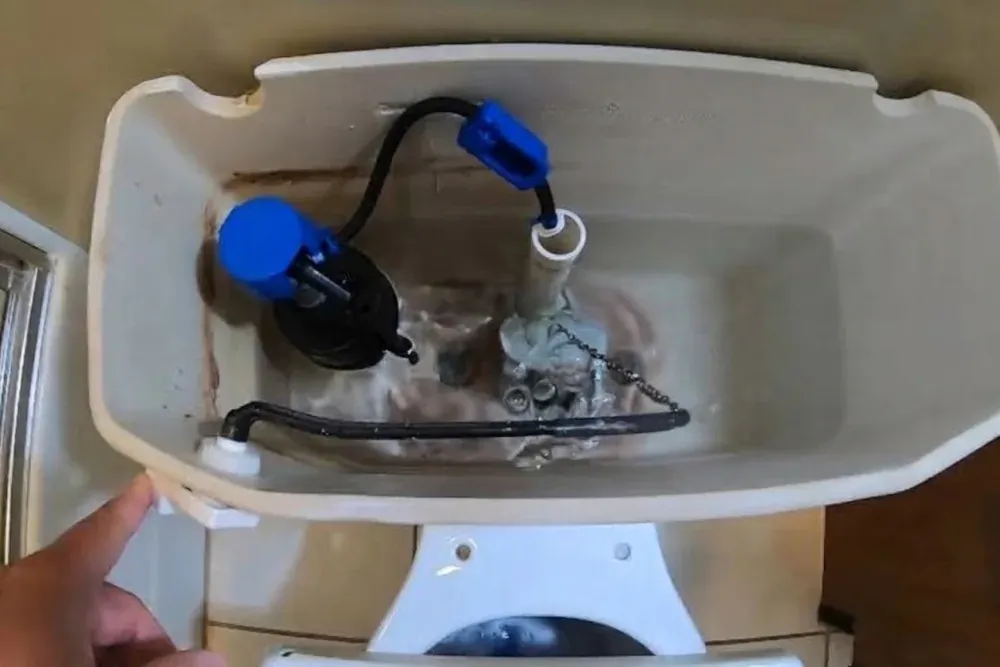
How An Upflush Toilet Works
The unit sits behind or beside the toilet. When you flush, waste enters the macerator, where blades break it down. A pump then pushes the slurry through a narrow discharge pipe, which connects to a drain line at a higher level.
Many units can also take water from a sink, shower or tub, which makes them useful for a full basement bathroom. Check the model before you plan the layout, since not every unit accepts every fixture.
| Feature | Upflush unit | Standard rough-in |
|---|---|---|
| Slab cutting | Usually none | Trenching required |
| Power | Needed to run the pump | Not needed |
| Maintenance | Occasional cleaning of the unit | Little beyond normal care |
| Noise | A pump runs on each flush | Silent |
| Best for | Small additions, hard-to-trench slabs | Full bathrooms, long-term plans |
What Installation Involves
Choose the location
Place the unit near an outlet and within the reach of the discharge route.
Run the discharge
Pipe the small-diameter line up and over to the drain stack, with a check valve and a vertical rise as the model requires.
Vent the unit
Many units use a carbon vent filter, while code in some places requires a full vent. Confirm local rules.
Connect supply and power
Supply lines connect to the toilet tank. The unit plugs into a protected outlet.
Test
Flush repeatedly and check every joint.
Basement Toilet Questions?
Call the Erie line and describe the space. We will tell you which setup fits.
Limits And Care
How to keep an upflush unit working
- Flush only toilet paper and waste
- Keep wipes, feminine products and paper towels out
- Use only cleaners the maker approves
- Keep the access panel clear for service
- Test the alarm if the model has one
These systems are less forgiving than standard toilets. A clogged macerator needs service. Keep the maker's manual and the service contact where you can find them.
When To Choose A Standard Rough-In
If you plan a full bathroom, a long-term living space or a rental, a standard drain with an ejector pit may be better. It handles all fixtures and is easier to service. Read our guide to plumbing installation for how we plan a full rough-in.
A drain that backs up near the unit can also be a main line problem. See drain cleaning or sewer inspection to find out. We also serve Lafayette. See the Lafayette page and the service area page.
Planning The Discharge Route
The discharge line is much smaller than a normal drain, often three-quarter inch or one inch. It can run horizontally for a limited distance and vertically up to a limit set by the pump. Check the maker's chart before you commit to a location.
The line ends at a drain stack or a drain branch that is already vented. Connect above a trap arm if the instructions require it. A poor connection point causes gurgling and slow flushes.
Choosing Between Models
Some units serve only a toilet. Others serve a toilet, sink and shower. Units with higher pumping power move waste farther and higher. Match the model to the fixtures you plan to add now and later.
Look at serviceability. A unit with a removable cover and an accessible motor is far easier to repair than one that is buried behind a finished wall.
Noise, Smell And Service
A properly installed unit with a working vent should not smell. If a smell appears, the vent filter may need replacing or a seal may have failed. Persistent gurgling suggests a venting issue.
Plan for service. These units need cleaning from time to time, and the maker may recommend a descaling product. Ask for the maker's service instructions at install.
Erie Notes: Permits, Licenses And Local Code
A toilet pump is a plumbing fixture connected to the drain system, so the work is regulated like other plumbing. The Town of Erie Building Division at 303-926-2780 handles permits and inspections, and it can tell you whether your model and venting plan are accepted.
Colorado licenses plumbers through the State Plumbing Board. Use the licensee lookup to check any plumber you plan to hire.
Questions Erie Homeowners Ask
Some people do, but venting, drain connection and permits matter. A plumber can make sure it meets code.
The pump makes a noticeable sound on each flush. Place it where noise is acceptable.
The pump does not run, so the toilet cannot flush normally. Plan for this in a primary bathroom.
Plumbing fixtures connected to the drain system typically need a permit. Ask the Town of Erie Building Division at 303-926-2780.
Some models accept sinks and showers. Check the maker's list before planning.