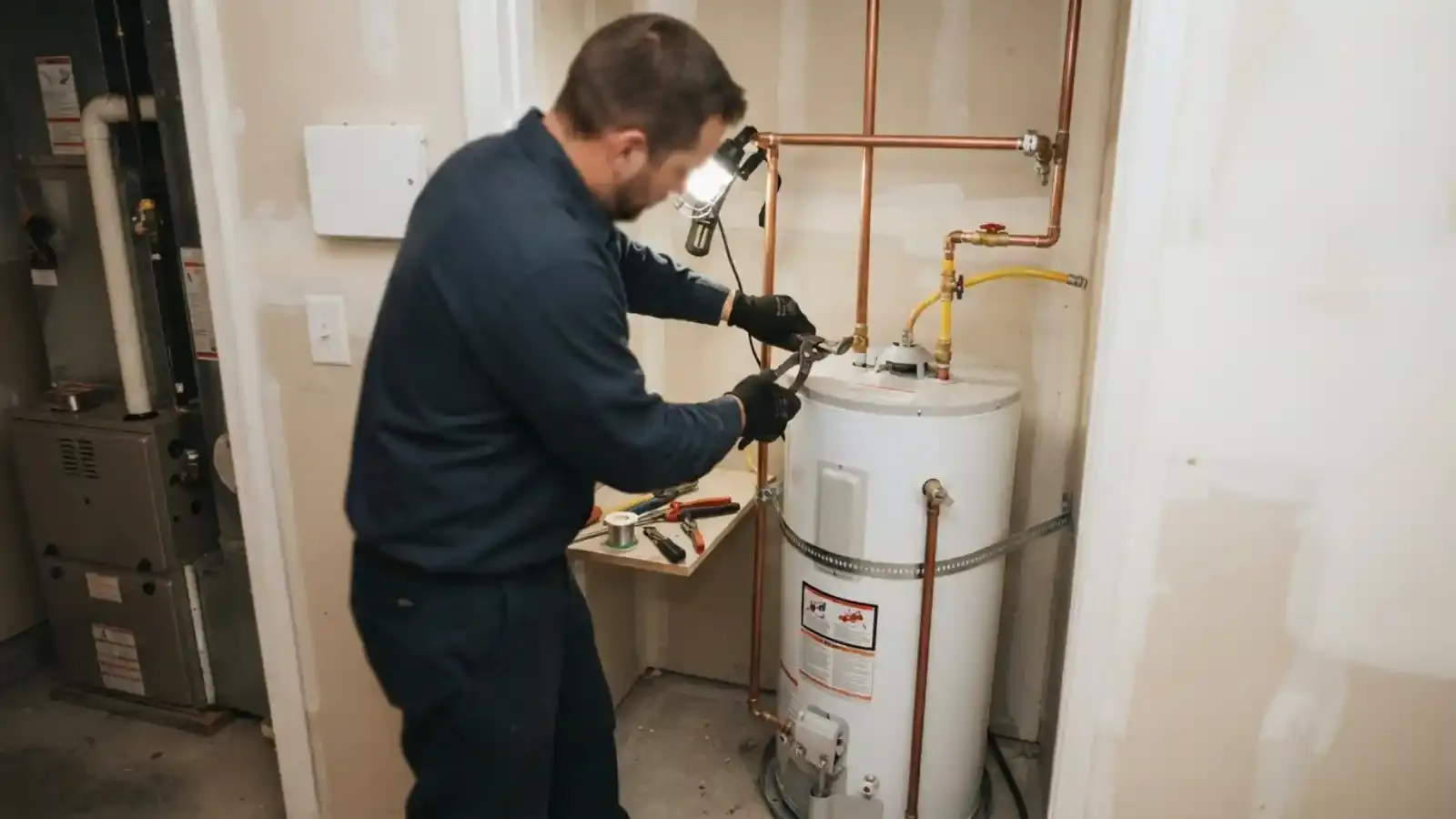
When You Need An Installation, Not A Swap
Installation work applies when a heater goes somewhere new, changes fuel or is added to a finished space. A basement bathroom, a detached garage workshop and an addition are typical examples. Each needs supply lines, drainage and venting planned before the tank arrives.
New construction or addition
Plumbing is roughed in before walls close, then the heater is set and connected at finish.
Relocation
Moving a unit out of a tight closet frees space and can simplify venting.
Fuel change
Converting from electric to gas, or the reverse, means new circuits or gas piping.
Adding a second unit
Large households or detached spaces sometimes use a second heater instead of long hot water runs.
Planning Questions We Answer First
Where will the unit sit, and can it be vented? Gas and propane tanks need a flue or direct vent path to the outside. Electric and heat pump models need clearance, a dedicated circuit and, for heat pump units, a condensate drain.
What does the home use at peak? A family with two showers running at once needs a different size than a couple. The plumber looks at bathroom count, tub size and appliance use to pick a tank volume or a tankless flow rate.
| Decision | Affects | Plan for |
|---|---|---|
| Fuel type | Operating cost, venting, gas or electric work | Gas line size or circuit capacity |
| Tank or tankless | Space, flow, upfront cost | Tankless needs venting and gas capacity |
| Location | Hot water wait time, venting path | Short runs to bathrooms and kitchen |
| Drain and pan | Leak protection | Pan with a drain line to a safe location |
| Expansion control | Pressure spikes in closed systems | Thermal expansion tank where needed |
How An Installation Goes
Site check
The plumber looks at the space, the existing lines and the venting path, then confirms what needs to be added.
Quote and permit
You approve the scope and price. The permit request goes to the local building authority.
Set and connect
The unit is set, plumbed and vented, with shutoffs and a relief valve line installed to code.
Inspection and handoff
After the inspection, we test the unit and show you where to shut off water, gas and power.
Rules You Should Know Before Hiring
The Colorado State Plumbing Board's December 2025 bulletin says water heater installs and replacements require a licensed plumber working for a registered plumbing contractor, with permits and inspections from the local authority. In Erie, the Town Building Division at 303-926-2780 handles those permits.
Gas appliances raise a separate safety point. A new gas heater needs proper combustion air and a vent that draws, and a carbon monoxide alarm nearby is cheap protection. If you ever smell gas, leave the building and call the gas utility or 911 before calling a plumber.
The same code items apply to a first-time install. The International Plumbing Code (IPC) covers relief valves, drain pans and expansion control, and the fuel gas code and manufacturer instructions cover venting and combustion air. Following the written instructions for the specific model is part of a lawful install.
What to do before the plumber arrives
- Clear a path to the space and remove stored items around the old or planned location
- Locate the main water shutoff and the gas shutoff, and tell the crew where each one is
- Photograph the data label on any existing heater
- Keep children and pets away from the work area
- Install a carbon monoxide alarm near gas appliances if you do not have one
What drives the price
An installation price depends on the unit and on how much new work the space needs. You get a written scope and number before any work starts.
If the plumber finds the existing lines cannot support the new unit, you hear the options before the job expands.
Want your real number? Call (303) 552-3896 and describe the job.
Ready To Plan A New Heater?
Call the Erie line and describe the space. We will tell you what the install needs.
After Installation
Keep a few feet of clear space around the unit and nothing stored against the flue. Test the relief valve gently once a year and flush the tank to clear sediment. Note where the water, gas and power shutoffs are so anyone in the house can find them.
If you are also redoing bathrooms or the kitchen, see plumbing installation for fixtures and supply lines. If the existing supply pipes are old galvanized steel, repiping may be worth planning at the same time.
We schedule new installations in ZIP 80516 and in the neighboring ZIPs 80026, 80027, 80530 and 80514. Tell us your street and which fuel the property has, since gas service, electric capacity and venting options differ between older Old Town homes and newer subdivisions.
Water Heater Installation Questions
Replacement swaps a failed unit in the same spot. Installation covers a new location, a new fuel or a space without existing connections, so it needs more planning and usually more code work.
It depends on bathroom count, peak demand and fuel. A common range for a family home is 40 to 75 gallons for a tank, but the plumber should size it to your actual use.
Often, yes, if combustion air, venting, clearance and a drain pan are handled. Gas units in closets need particular care, so the plumber checks the space first.
Yes, when one exists. Removal and haul-away are included in the quoted scope.